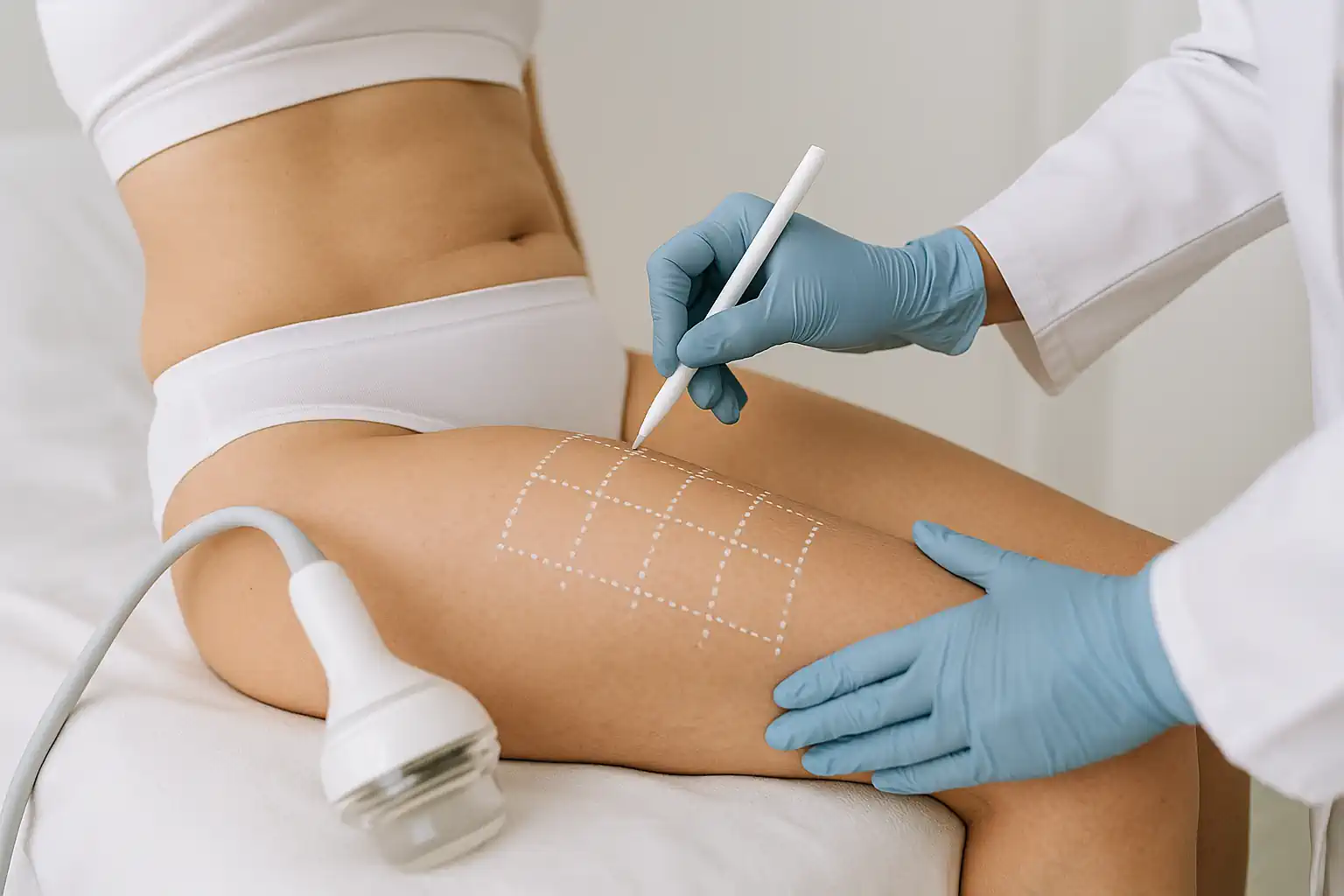
What changes between a recent stretch mark, a white stretch mark and skin that has lost texture
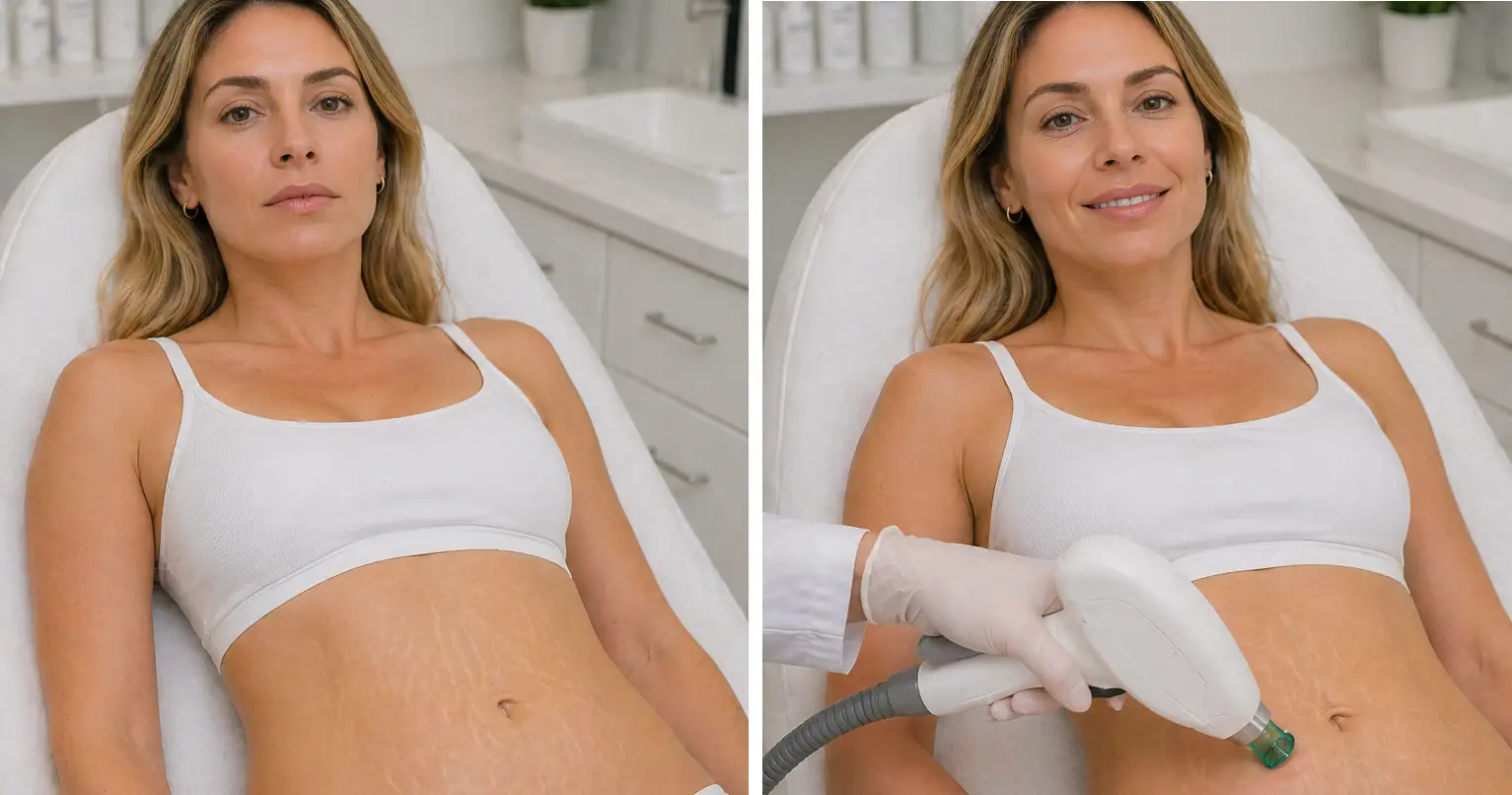
Stretch marks appear when the skin stretches faster than it can adapt. They may develop during pregnancy, weight changes, growth, training, hormonal changes or because of genetic predisposition. At first they are often red, pink or purple; over time they can become white or pearly, and that changes the type of approach.
Treatment depends greatly on the type of stretch mark. Red stretch marks often respond better to technologies that address their vascular component and color, such as intense pulsed light. White or older stretch marks generally require treatments focused on renewing texture and stimulating collagen, such as CO2 laser, Q-Switch laser or platelet-rich plasma depending on the case.
Treatments for Stretch Marks
Why do stretch marks appear and how can they be improved?
- Disruption of supporting fibers: When skin stretches rapidly, collagen and elastin fibers can be damaged. Treatments such as CO2 laser and platelet-rich plasma may help stimulate remodeling and improve tissue quality.
- Red or recent stretch marks: They have a stronger vascular component and often look pink, red or purple. In these cases, intense pulsed light (IPL) may help reduce the color and make them blend better with the surrounding skin.
- White or older stretch marks: They are usually more structural and require work on texture, depth and skin quality. Depending on the medical assessment, options may include Q-Switch laser, CO2 laser or combinations.
Can stretch marks be removed completely?
Not always. A realistic goal is to improve their appearance: make them less noticeable, blend the color better with the surrounding skin, improve texture and make the area look more even. Response depends on whether they are red or white, how old and deep they are, their location and overall skin quality.
In general, recent stretch marks tend to respond better than older ones, which is why it can be useful to address them while they still have a reddish or purplish color.
What types of stretch marks are there?
- Red stretch marks: They are more recent and have an active vascular component. They are often better candidates for intense pulsed light.
- Purple stretch marks: These are also often recent or inflammatory and may improve when color and vascularity are addressed.
- White stretch marks: They are older. They generally require treatments aimed at remodeling, texture and collagen stimulation.
- Atrophic or depressed stretch marks: They have a depressed or irregular texture and may require a combination of technologies to improve the surface and tissue quality.
What results can I expect from the treatments we offer?
Results depend on the type of stretch mark and the treatment selected. For red stretch marks, intense pulsed light may help reduce color and make them less visible. For white or older stretch marks, the goal is usually to improve texture, stimulate collagen and make the skin look more uniform.
In many cases, a combined plan may be used: CO2 laser for resurfacing, Q-Switch laser for skin quality and tone, intense pulsed light for the vascular component, and platelet-rich plasma to support tissue repair and recovery.