Why can I look older even if I do not have many wrinkles?
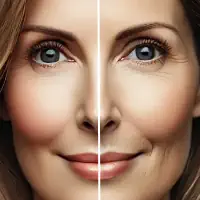
Because a face does not age only at the surface. Over the years, the skin, the distribution of volume, tissue support, contour and even the way light and shadow fall across the face can all change. That is why some people with very few lines feel they look older, while others with visible wrinkles still look remarkably fresh.
When someone says “I look older,” they are usually describing an overall impression rather than a diagnosis. The eyes may look more tired, the cheeks less prominent, the lower face heavier, the jawline less defined, the skin thinner, or several of these changes may be present at once. This page starts from that broader question: what changed to make the face look different.
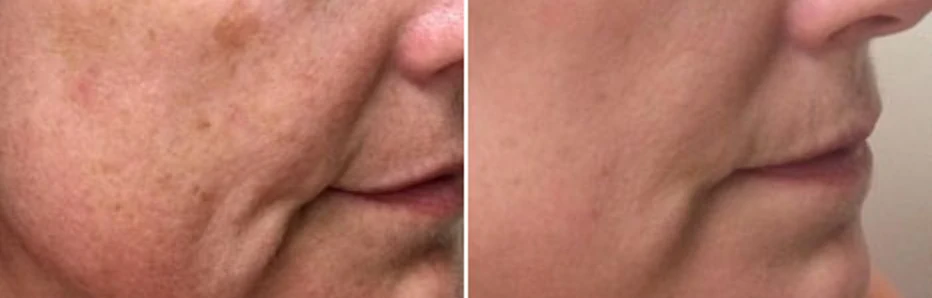
What actually changes in the face as we age?
Facial aging happens in layers. The skin may become thinner, drier or less elastic; some fat compartments lose volume or change their distribution; supporting tissues behave differently; and deeper structures also change over time. None of these changes progresses at exactly the same rate in every person.
That is why there is no single “aged face.” In one woman, the main change may be around the eyes; in another, loss of the facial oval; in another, marked photoaging of the skin; and in another, loss of midface volume. Chronological age alone does not tell us what is creating the appearance that concerns you.
What are the first signs of facial aging?
There is no universal first sign. Some people notice fine lines or texture changes first; others notice a more tired-looking eye area, less projection in the cheeks, new shadows or a subtle loss of definition along the contour. Skin brightness or evenness can also change before a deep wrinkle is present.
The useful question is what has changed compared with your own face, rather than comparing yourself with a theoretical age. Two people of the same age can show completely different patterns. When several small changes begin to accumulate—skin, volume, movement and support—the overall impression of aging can become noticeable even if none of them is dramatic on its own.
Why can it sometimes feel as though I aged “all at once”?
Often the changes have been gradual but become noticeable when several components cross a threshold at the same time. A small loss of volume can make certain shadows more visible; reduced elasticity can begin to alter the contour; and duller skin can reinforce a tired appearance. The result can seem sudden even though the process was progressive.
There are also times when weight changes, menopause, prolonged stress, poor sleep or a recent illness can change how strongly tiredness or volume loss is perceived. That does not mean all of these factors structurally “age” the face in the same way. If the change is genuinely sudden, marked or accompanied by other symptoms, it should not automatically be attributed to age; it should be assessed first.
Are facial aging, wrinkles, facial laxity and sun damage the same thing?
No. They overlap, but they describe different problems. wrinkles are lines or folds that may be related to movement, skin changes or both. facial laxity refers mainly to looseness, loss of support and downward movement of tissues. Accumulated sun damage may appear as pigmentation changes, uneven texture, reduced elasticity or visible vessels.
By contrast, facial aging is the broader concept: it tries to explain why the face as a whole no longer looks the same. It can include wrinkles, laxity or signs of sun damage, but also loss or redistribution of volume and changes in contour. This page therefore does not replace the more specific concern pages; it helps someone who is not yet sure what has changed to organize what they are seeing.
How can I tell which part of my face is making me look older?
A useful way to think about it is to identify what changed before deciding how to correct it. If the main issue is lines that appear with expression, movement is more important. If the face looks more hollow or new shadows have appeared, volume may have changed. If the cheeks have descended or the jawline has lost definition, support and contour matter more. If pigmentation, uneven tone or rough texture dominate, the main issue may be the skin itself.
These clues can help you orient yourself, but they are not a self-diagnosis. Several causes may coexist in the same area. A deeper fold, for example, does not necessarily mean it “needs filler”: it may look stronger because volume changed elsewhere, tissues descended or skin quality declined. Treating only what is visible without understanding why it appeared is one of the easiest ways to end up with an unnatural result.
Why can the shape of my face change even if my weight stays the same?
Because body weight does not describe how facial tissues are distributed. Over time, volume can decrease in areas that once provided visual support while other tissues may sit lower or become more concentrated in the lower third. The deeper structures that support that volume also change. The face can therefore become less triangular, with less midface projection and more visual weight below, even when the number on the scale has barely changed.
That is why “adding volume” is not an automatic answer either. First we need to decide whether volume is truly missing, where it is missing, how much of the change is related to descent and how much simply reflects that person’s natural anatomy.
Can losing weight make the face look older?
Yes, particularly when weight loss is substantial or rapid, because facial volume may decrease and shadows, folds or laxity that were previously less visible may become more apparent. But not every slim face looks aged, and not every weight loss causes laxity. The effect depends on age, genetics, skin quality, how much volume was lost and where it was lost.
The opposite can also happen: what someone interprets as “lack of volume” may actually be tissue descent or a contour change. Assessing this before adding volume is important so that an attempt to rejuvenate the face does not make it look heavier.
Does menopause change the skin and the appearance of the face?
The decline in estrogen during the menopausal transition is associated with changes in skin hydration, thickness, collagen and elasticity. Some women notice more dryness, more visible lines or skin that seems to lose firmness more quickly. Menopause alone does not explain every facial change because facial aging also involves volume and deeper structures.
If skin changes appear together with broader menopausal symptoms, the approach should not be reduced to an aesthetic issue. Medical assessment can help separate what belongs to the skin, what belongs to facial aging and what may also deserve gynecologic or general medical follow-up.
Do stress, poor sleep or smoking really make the face age?
Sleep deprivation or periods of stress can make a tired appearance more obvious: under-eye shadows, pallor, dehydration or temporary changes in expression. That should not be confused with saying that one bad night created a permanent structural change. True aging is cumulative and multifactorial.
Smoking and sustained sun exposure are, however, relevant external factors in skin aging. Sun exposure in particular adds damage that may appear as pigmentation, uneven texture and loss of elasticity; when those signs dominate, it is useful to look specifically at photoaging.
Can a face be rejuvenated without changing its features?
That should be the goal when someone wants to look more rested or more like themselves a few years ago. Rejuvenation does not mean erasing every line or trying to recreate a twenty-year-old face. It means identifying which signs have the greatest impact and deciding which can be improved while preserving proportions, expression and individual features.
Often the most natural result comes from prioritizing. Trying to correct every line, every shadow and every asymmetry separately can lead to overtreatment. When the two or three changes that are driving the perception of age are identified, the plan can often be much simpler.
Which changes can be improved and which cannot be completely reversed?
Aesthetic medicine can improve several components of aging, but it does not stop time or return every structure to its previous state. Skin quality can improve; some lines can soften; certain deficits in volume or support can be addressed; and some contour changes can improve. What is realistically possible depends on which structure is involved and how advanced the change is.
There are also situations in which a non-surgical procedure has clear limits. If an expectation requires repositioning a large amount of tissue or removing a substantial excess of skin, a responsible consultation should say so. Knowing what should not be done is part of a good assessment.
What should be looked at first when wrinkles, laxity, pigmentation and volume loss are all present?
Not everything necessarily needs to be treated. The first step is to define what most changes the overall expression of the face and what actually concerns the person. Sometimes a patient comes in focused on one wrinkle and, during assessment, realizes that something else is creating the tired appearance. Or she asks for “tightening” when the dominant issue is skin quality.
A good assessment organizes the face by priorities: movement, volume, support, contour and skin. It then decides whether one, several or none of those components need intervention. That sequence helps avoid choosing procedures because they are fashionable or because a technology has a familiar name.
When does it make sense to seek an assessment for facial aging?
It makes sense when you know something has changed but cannot identify what, when several changes overlap, or when you have researched solutions and each one seems to address a different problem. You do not need to arrive having chosen a treatment. In fact, for an informative consultation it is often more useful to describe the concern simply: “I look tired,” “I lost definition,” “my face looks heavier,” or “I do not look like myself in photos anymore.”
The first step is to observe the face at rest and in motion, assess the skin, volume and support, understand what has changed compared with previous years, and clarify what result you are looking for. Only then does it make sense to discuss options.
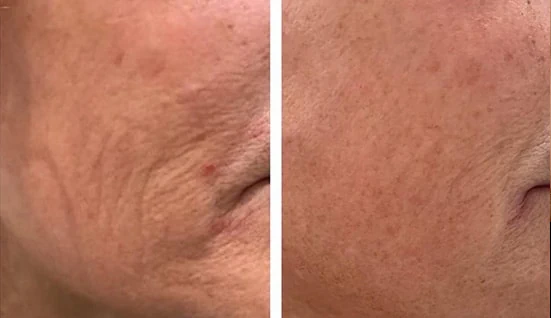
Once we understand what changed, what can be decided during an assessment?
The assessment can determine whether the priority should be movement, skin quality, support, volume or contour, and also whether the best choice is not to intervene in a particular area. The options linked below are possible paths associated with this concern, not an automatic recommendation for every person.