
Masseter Botox for bruxism: when it is indicated
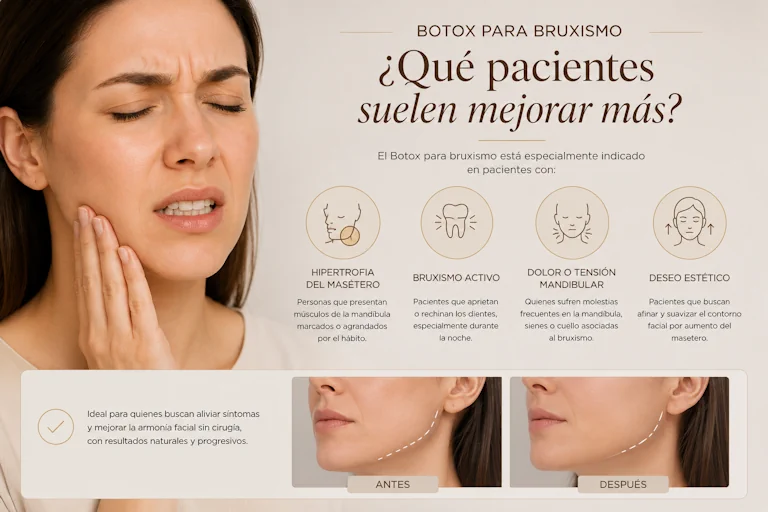
El Botox for bruxism is considered when the masseter clearly contributes to the problem: excessive force, persistent tension, jaw fatigue or muscle hypertrophy associated with clenching. The aim is to reduce contraction strength in a controlled way without eliminating normal jaw function.
Not every jaw pain problem needs this treatment. Before recommending it, we assess whether the issue appears predominantly muscular or whether a dental, joint or sleep-related component needs a different evaluation. If you are still at that stage, start with the guide to bruxism, masseter muscles and jaw tension.
If you already know your problem is muscular but want to understand why I would or would not recommend Botox in a specific case, you can also read how I assess the masseter before recommending treatment.
Botox for bruxism price
The current price for this treatment is shown at the top of this page and is updated from the site’s central pricing source. It applies to the specific treatment for Botox for bruxism, not the general price of facial Botox.
A prior consultation is still important because the price of an injection does not determine whether the treatment is appropriate. We first need to confirm that the masseter is truly a central part of the problem and that there is no other cause that should be addressed first.
What results to expect from Botox for bruxism
The main goal is to reduce excessive masseter strength and relieve some of the muscular overload. In appropriately selected patients, it can reduce the sensation of a tired or tense jaw and make the muscle work less intensely during clenching.
When masseter hypertrophy is present, the reduction in activity may gradually be accompanied by a subtle reduction in muscle volume. That aesthetic change is secondary when the reason for treatment is bruxism.
Botox does not reverse existing tooth wear, does not replace a night guard when one is indicated, and does not by itself eliminate every factor that contributes to clenching.
When the effect starts and what changes first
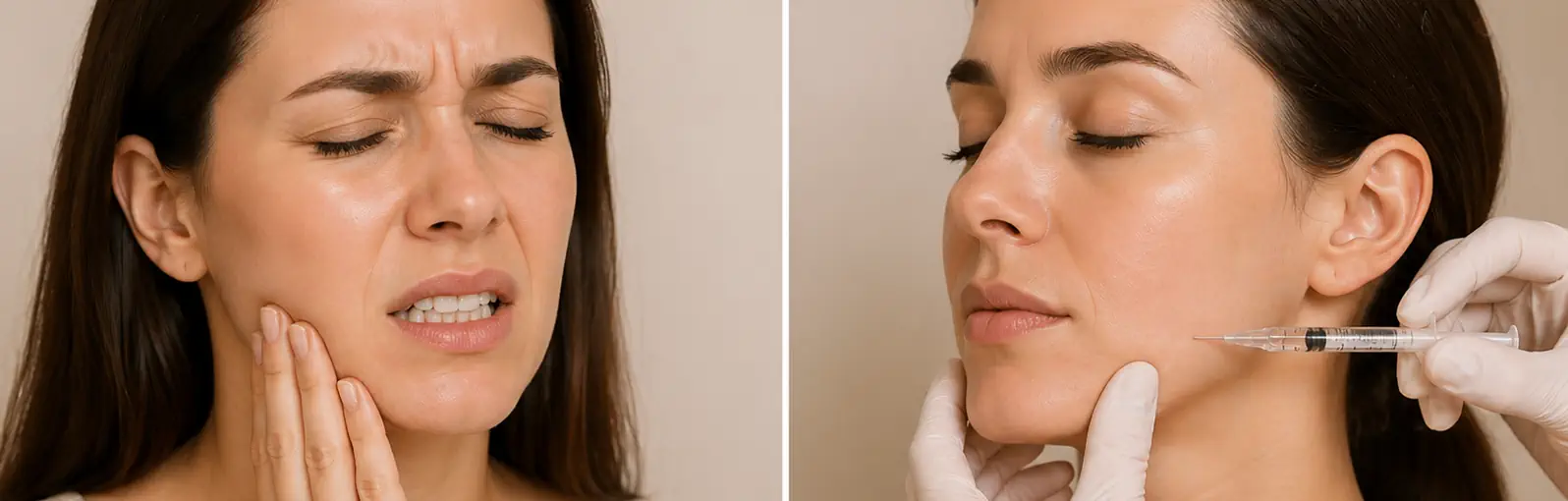
The effect develops progressively. The first change we look for is not a slimmer face, but a reduction in strength and the sensation of muscular overload.
The response is reviewed after treatment to assess how much masseter activity has decreased and whether the balance between relief and function is appropriate. When muscle hypertrophy was present, contour changes are usually more gradual than the reduction in tension.
How long Botox for bruxism lasts and when it is reassessed
The effect is temporary and usually lasts several months. Exact duration varies with muscle strength, the intensity of clenching and individual response.
We do not use the same automatic treatment interval for everyone. When the effect begins to wear off, symptoms, masseter strength and the actual need to repeat treatment are reassessed.
Who tends to be a better candidate
The treatment usually makes more sense when there is a clear muscular component: very active or hypertrophied masseters, persistent tension, fatigue on waking, or a night guard that protects the teeth but does not resolve the sensation of overload.
If joint pain, locking, a dental problem that is still being evaluated, or relevant sleep symptoms predominate, those issues may need to be assessed first. Botox should not be used as a shortcut to avoid understanding the cause of pain.
Botox for bruxism and a dental night guard do not serve the same purpose
A dental night guard can be essential to protect the teeth when indicated by a dentist. Botox addresses a different part of the problem: it reduces masseter contraction strength when that muscle is clearly overloaded.
That is why they can complement each other in some cases, but one does not automatically replace the other. If your main question is what a splint does, why you may keep clenching while wearing it, or how much of the problem is muscular, that explanation is on the information page about night guards and bruxism.
Botox for bruxism and Botox for facial slimming are not the same
The muscle treated may be the same, but the intent is different. For bruxism, the priority is reducing overload and excessive muscle strength. When the main concern is the width of the lower face and masseter hypertrophy is present, the goal is aesthetic.
If your main concern is facial contour rather than jaw tension, see Botox for facial slimming. Keeping these pages separate makes it possible to explain different expectations without confusing function with aesthetics.
Consultation for Botox for bruxism in Buenos Aires
We see patients in Belgrano, Buenos Aires. During the assessment we review symptoms, masseter strength and hypertrophy, asymmetries and dental history to decide whether Botox makes sense in your case and what goal is realistic.
If you are already considering this treatment, you can check the current price shown on this page and contact us to arrange an assessment.
Ask about Botox for bruxism