What non-surgical localized fat reduction means
Localized fat reduction aims to improve the contour of a specific area when subcutaneous fat persists even though overall weight is stable. It is not a weight-loss treatment, it does not replace healthy habits, and it does not act on visceral fat.
The goal is also not to “erase” every normal body fold. We determine whether reducing some volume can improve proportion without worsening skin quality or creating an unnatural transition.
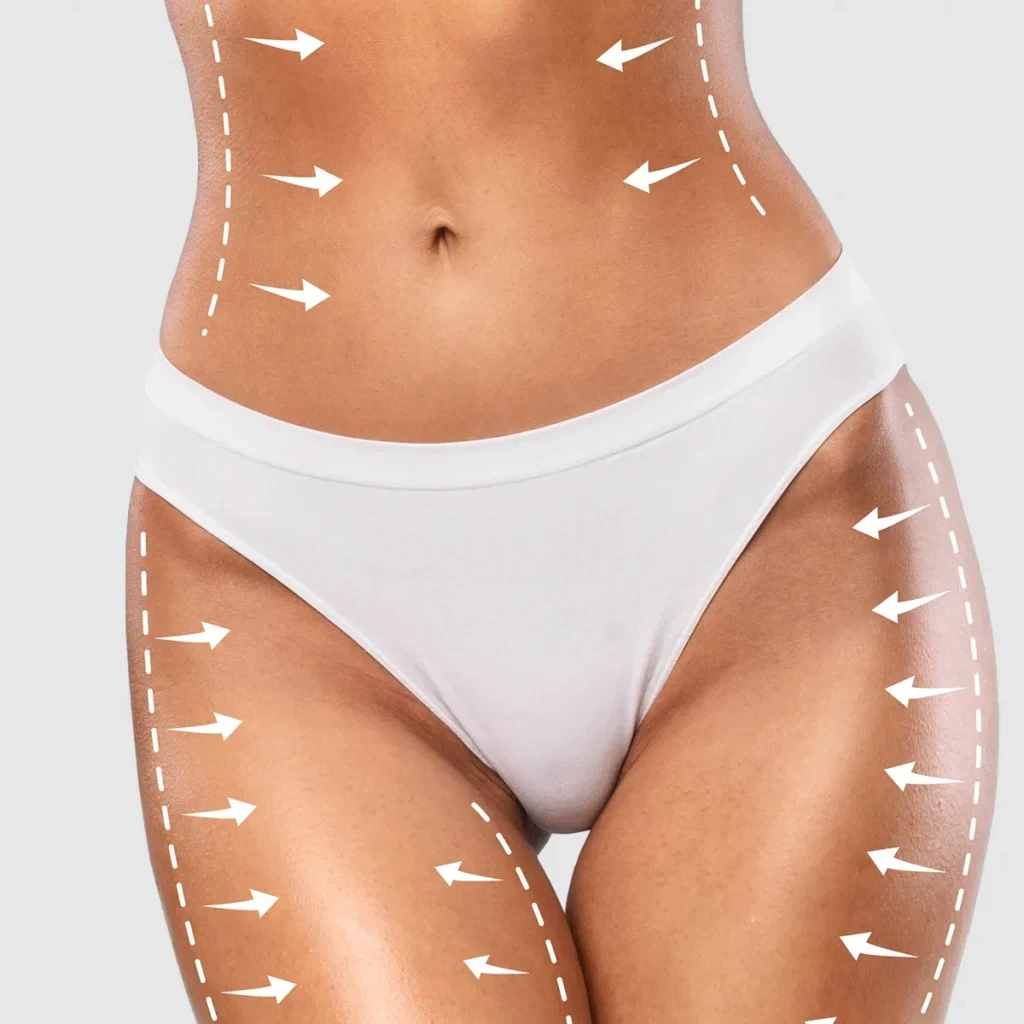
If you are not yet sure whether what you see is fat, laxity, swelling or a combination, start with our guide to localized fat. This page starts one step later, when the main issue already appears to be localized subcutaneous fat.
Who it may make sense for
It usually makes more sense when weight is relatively stable, the concern is concentrated in one or a few areas, and the person is not trying to lose weight throughout the body but to improve a specific disproportion.
- There is a localized deposit that remains even though the rest of the body has changed.
- The skin is in reasonable condition to accommodate a reduction in volume.
- The expectation is an improvement in contour, not a result equivalent to liposuction.
- There is no broader weight issue, medical cause or visceral component that should be addressed first.
The indication does not depend only on “how much fat there is.” It depends on whether reducing it would actually make that area look better.
What we assess before recommending treatment
We first look at the overall contour. An area may contain fat but also laxity, cellulite, distension or a combination. If only volume is treated without understanding the rest of the tissue, the result may be disappointing even if fat has technically been reduced.
- area and thickness of subcutaneous fat;
- skin quality and laxity;
- current weight and recent changes;
- how the area relates to the waist, abdomen, hips or thighs;
- what change the patient expects to see;
- whether there is realistic room for improvement without surgery.
The assessment can also lead to the decision that further volume reduction is not advisable if the skin is unlikely to adapt or if fat is not actually the main concern.
Which areas we assess most often
The most common consultations are about the abdomen, waist and flanks, and the outer hip and thigh area that many patients call saddlebags / outer-thigh fat.
We do not treat them as identical deposits. On the flanks, the goal is usually to improve the transition of the waist; on the outer thighs, it is especially important to respect the natural line of the hip and outer thigh.
If you want more detail on those areas, you can read flanks, saddlebags and outer thighs. For the female abdomen and changes related to age, weight or pregnancy, see the guide on abdominal fat in women.
Where Accent Prime fits
Accent Prime is one of the tools we may consider when the goal includes body contour and the case is well selected. The platform combines radiofrequency and ultrasound, and the indication is adjusted according to the area and the component we want to address.
We do not choose Accent Prime simply because someone says “I want to remove fat.” We first determine whether localized adipose tissue is actually present, assess the skin and define what degree of change is reasonable. Only then do we decide whether this technology adds value.
If you are specifically researching the device, its mechanism, results and limitations are explained on Accent Prime.
What results are realistic
With a non-surgical approach, we expect a gradual improvement in contour, not a transformation comparable to surgery. The possible change depends on the amount of adipose tissue, the area, the skin and individual response.
We do not use a universal number of centimeters or a fixed number of sessions as a promise. Before starting, we define what result would be clinically reasonable and what limitations apply to that case.
A moderate reduction may be enough if it improves a body transition. Likewise, reducing more volume does not always mean achieving a better silhouette.
What if laxity or cellulite are also present?
They can coexist. Fat mainly changes volume; laxity changes support and the way tissue hangs; cellulite mainly changes the surface.
If another issue is dominant, a fat-reduction page is no longer the best starting point. The plan should address the component that most determines the result, rather than force volume reduction simply because some adipose tissue is present.
What localized fat reduction does not do
- It is not a weight-loss treatment.
- It does not provide aesthetic reduction of visceral fat.
- It does not replace nutrition, physical activity or stable weight.
- It does not correct marked laxity by itself.
- It does not guarantee that every localized fold will disappear completely.
- It does not replace surgery when the amount of volume or laxity requires a different type of approach.
What the consultation is like and how the plan is defined
The consultation begins with the area that bothers you and the result you want to achieve. We then assess adipose tissue, skin, body proportions and relevant history. With that information, we determine whether treatment makes sense, which strategy may help and what result is realistic.
You do not need to arrive already knowing which technology you want. In fact, the order we look for is the opposite: problem → assessment → goal → tool.
Ask about my case on WhatsApp
Further reading
You can also read about skin, treatments and medical decision-making in our
medical aesthetics blog.